
Most people have never had a proper hearing evaluation and arrive expecting something like the screening they had at school. A diagnostic evaluation is a good deal more informative than that, and knowing what the parts are for makes the results much easier to follow.
It starts with a conversation, and that part matters
Before any testing, we want the history. When did you first notice a change? Which situations are hardest — a restaurant, a meeting, the television, one particular voice? Is one ear worse? Is there ringing, dizziness, pain, or discharge? Any noise exposure at work or otherwise, any ear surgery, any family history?
This is not a formality. It shapes which tests are worth doing, and it frequently points at the answer before any tone is played. It is also why bringing someone who knows you is genuinely useful — they usually noticed the change earlier than you did, and they can describe the situations where it shows.
Looking in the ear
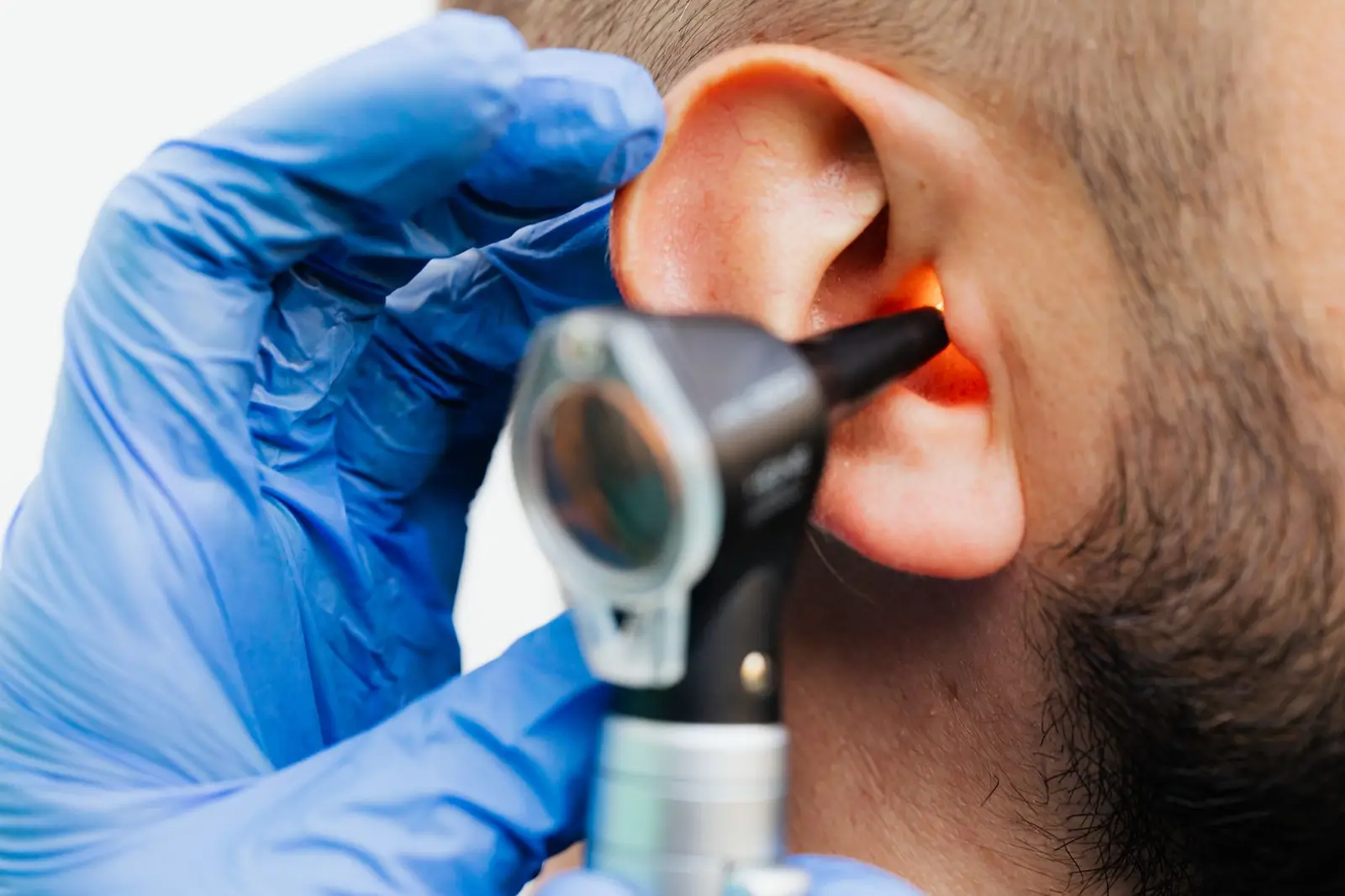
An otoscope shows the canal and the eardrum. It identifies wax, infection, perforation and structural problems immediately, and it determines whether the rest of the testing can proceed as planned. If there is enough wax to block the view, dealing with that comes first — it affects the results.
Tympanometry: how the eardrum moves
A soft tip seals the canal and varies the pressure slightly while measuring how the eardrum responds. It takes seconds, it is painless, and it is the quickest way to detect fluid behind the eardrum, a pressure problem in the middle ear, a perforation, or unusual stiffness.
It is particularly valuable because it tests a part of the system the tone test cannot isolate on its own.
Pure tone audiometry: the part people expect
Tones at different pitches are presented through headphones and the level is varied to find the quietest you can reliably detect at each. That gives air conduction thresholds.
Bone conduction is then measured with a small vibrator behind the ear, sending sound directly to the inner ear and bypassing the outer and middle ear entirely. Comparing the two is what distinguishes a conductive loss — something blocking sound getting in, which is often treatable — from a sensorineural loss originating in the inner ear.
That distinction is the single most clinically important output of the appointment.
Speech testing: what you can actually understand
Detecting a tone and understanding a word are different abilities, and speech testing measures the second. You will be asked to repeat back words at levels that are varied deliberately, and sometimes with background noise added.
This predicts real-world experience better than the audiogram alone, and it is why two people with similar audiograms can have quite different results from the same device.
Reading the audiogram
Results are plotted with pitch running left to right, low to high, and loudness running top to bottom, quiet at the top. Marks nearer the top mean better hearing.
The shape usually tells you more than any single number. Age-related and noise-related losses typically affect high frequencies first, which is why speech sounds present rather than absent but unclear — the vowels carry the volume and are largely intact, while the consonants that carry meaning sit in the high frequencies that have gone.
We will go through your audiogram with you rather than handing you a chart. If treatment makes sense we will say so and explain the options; if it does not, we will say that too; and if something in the results suggests you should see a physician, we will tell you and explain why.
This article is general information about hearing health, not a diagnosis or treatment advice for any individual. Ear symptoms vary in cause and urgency — if something has changed in your hearing, have it assessed.