
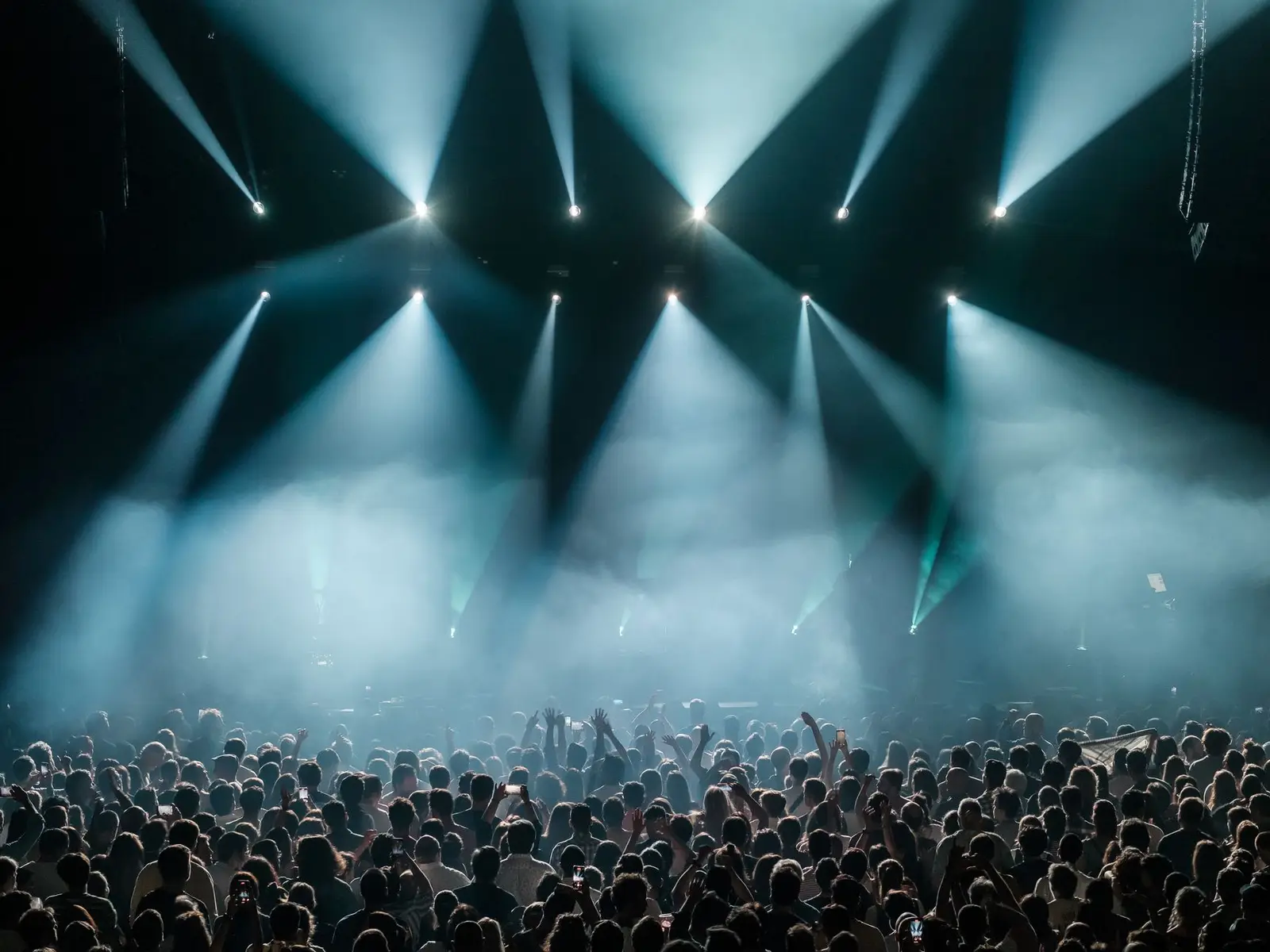
Ten years ago, explaining a filtered earplug meant starting from scratch. Now people arrive already owning a pair and asking a much better question: is this doing anything, and is there something better? Both parts have real answers.
What a filter does that foam does not
A foam plug blocks high frequencies far more than low ones. The result is not quieter music — it is muddier music. Speech loses its consonants, a band loses its top end, and everything takes on the quality of listening through a wall. That is why people take foam plugs out halfway through a concert, which protects nothing.
A filtered plug uses a small acoustic channel to reduce sound more evenly across frequencies. Less overall volume, roughly the same balance. Speech stays intelligible, music still sounds like music, and the plug stays in — which is the only property that actually matters, because the best hearing protection is the kind that is being worn.
Where the off-the-shelf ones do well, and where they do not
Consumer filtered earplugs — Loop and its many competitors — are genuinely useful. For concerts, bars, motorbikes, noisy commutes and sensory overload they are inexpensive, socially unobtrusive, and enormously better than nothing or than foam.
Their limitation is fit. They come in a few generic sizes and seal by compressing against the canal. If your canal is unusually narrow, unusually wide, or a shape the tips do not suit, the seal is imperfect, and an imperfect seal leaks low frequencies and undercuts the protection. You may also find they work loose over a long evening, or become sore after a few hours.
The other limitation is that the attenuation is fixed. You get the one amount of reduction the product offers, whether you are at a rock show or in a restaurant.
- Good for: concerts, bars, commuting, motorbikes, sensory sensitivity, occasional use
- Less good for: long sessions, unusual canal shapes, work-level noise exposure
- Not designed for: firearms, where impulse noise needs a different approach
What custom adds
A custom plug is molded from an impression of your own ear canal, so the seal is complete and repeatable. That fixes the leak problem, and it fixes the comfort problem — a well-made custom plug can be worn for a full working day or a full gig without becoming sore, because the pressure is spread over the whole canal rather than concentrated on the points where a generic tip happens to touch.
Custom plugs also take interchangeable filters, so the same pair can be set up for different amounts of reduction. A musician might use one filter for rehearsal and another for performance.
The honest comparison: if you use protection occasionally and the generic ones fit you comfortably, they are a reasonable answer and there is no reason to spend more. If you wear protection regularly, for hours at a time, or your hearing is part of how you earn a living, custom is a different category of product and the difference is obvious the first time you wear one.
Protection does not undo damage
Worth saying plainly: noise-induced hearing loss is permanent and it accumulates. The hair cells of the inner ear do not regenerate, and the damage from thousands of moderately loud evenings adds up the same way the damage from one very loud one does.
This is the rare part of hearing care where prevention genuinely works and is genuinely cheap. Protecting hearing you still have is far more effective than anything that can be done after it has gone.
If your ears ring after a loud event, that is not a harmless after-effect — it is a sign the exposure was enough to matter. Repeated, it is how noise-induced loss develops.
References
This article is general information about hearing health, not a diagnosis or treatment advice for any individual. Ear symptoms vary in cause and urgency — if something has changed in your hearing, have it assessed.