
Most people meet earwax as a nuisance, which is a shame, because it is one of the more elegant things the body does without being asked. Understanding what it is for makes it much easier to tell the difference between wax that is working normally and wax that has genuinely become a problem — and that distinction decides whether you need an appointment or simply need to leave it alone.
It is a defence system, not debris
Cerumen — the clinical name for earwax — is made by glands in the outer third of the ear canal. It is a mix of secretions, shed skin and the oils that come with them. It is mildly acidic, which discourages bacteria and fungi, and it is water-repellent, which keeps the delicate skin of the canal from drying and cracking.
It also traps things. Dust, flakes of skin, the occasional insect: they stick to the wax rather than reaching the eardrum. An ear canal with no wax in it at all is not a clean ear. It is an unprotected one, and it tends to itch.
The ear cleans itself, and it is good at it
The skin lining the ear canal migrates outward, slowly, carrying wax with it toward the opening where it dries and falls away without you noticing. Jaw movement — talking, chewing, yawning — helps it along. For most people, most of the time, this works so well that the subject never comes up.
Which is why the single most useful piece of earwax advice is also the least satisfying: for the majority of ears, the correct action is nothing at all.
When it stops working
Wax becomes a problem when more is produced than leaves, or when something pushes it deeper than the self-cleaning mechanism reaches. Narrow or bendy canals, a lot of hair in the canal, drier wax that does not migrate well, and age all make accumulation more likely. So do hearing aids, earbuds and earplugs, which occupy the canal and block the exit route — this is a genuinely common reason hearing aid wearers find their devices sounding weak.
The symptoms are reasonably distinctive. A blocked or full feeling. Hearing that has become muffled, often in one ear and often quite suddenly. Sometimes an ache, an itch, ringing, or the unsettling sensation of hearing your own voice echo inside your head. Occasionally dizziness, when wax presses against the eardrum.
- Hearing in one ear has become muffled, especially after a shower or swimming
- One ear feels full, blocked or under pressure and will not clear
- Your hearing aids have started whistling, cutting out or sounding thin
- There is an ache or an itch you cannot reach
- You have been told you have narrow canals, or you produce wax quickly
Why a look beats a guess
Here is the part worth taking seriously: the symptoms of an impacted plug of wax are almost identical to the symptoms of several things that are not wax at all. A middle ear problem, a sudden sensorineural hearing loss, a perforation, an infection — all can present as "my ear feels blocked and I cannot hear properly."
Sudden hearing loss in particular is time-sensitive. Treating it as wax, trying drops for a couple of weeks and waiting to see is exactly the wrong response, and the window for treatment can close while you wait.
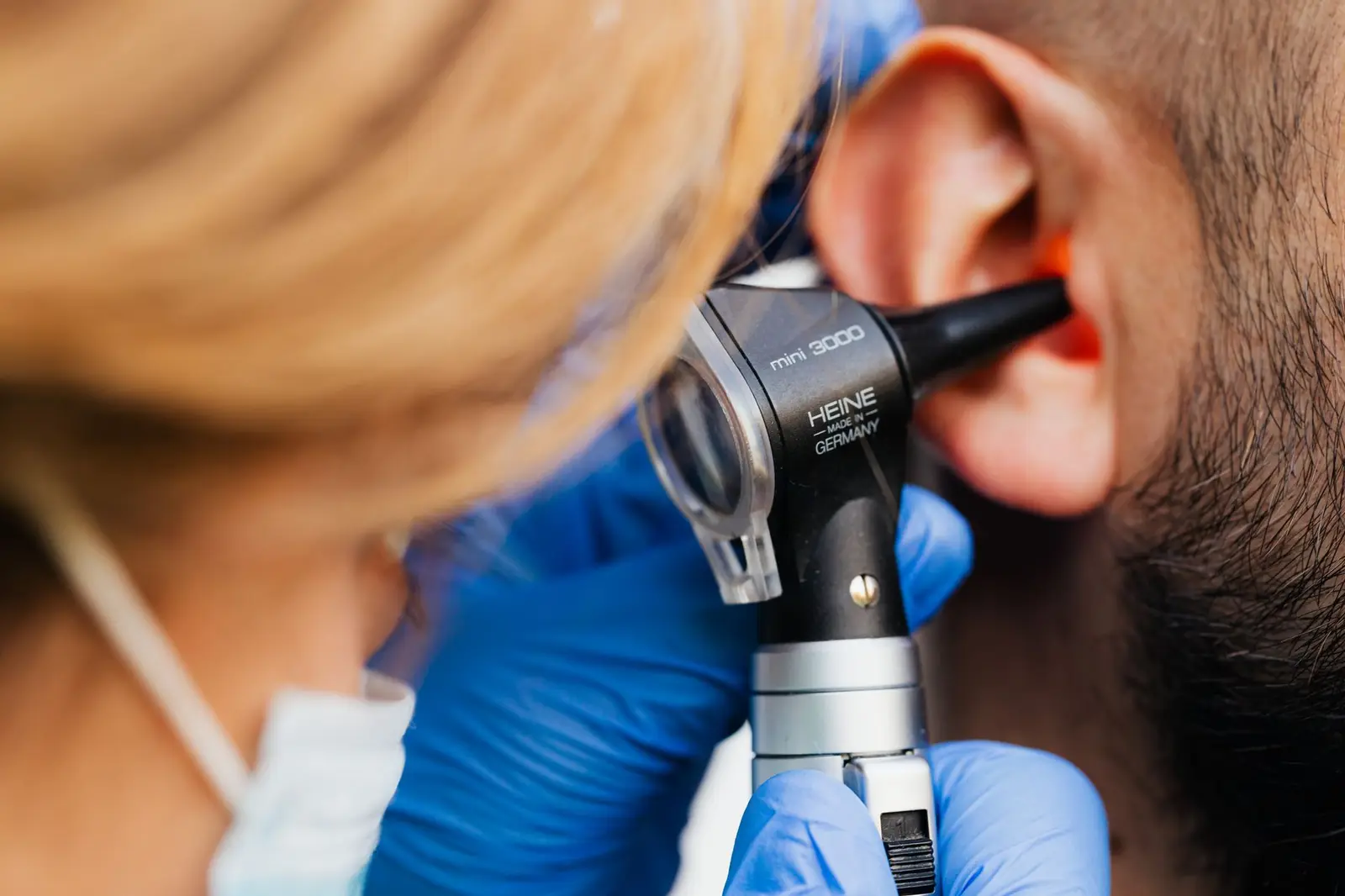
A look in the ear takes a minute and settles it. If it is wax, it can usually be dealt with in the same appointment. If it is not, you have found that out early rather than late.
If your hearing drops suddenly — particularly in one ear, particularly over hours rather than weeks — treat it as urgent and get it looked at rather than assuming wax.
This article is general information about hearing health, not a diagnosis or treatment advice for any individual. Ear symptoms vary in cause and urgency — if something has changed in your hearing, have it assessed.